Asphalt Repair in Ocala, FL
Potholes, cracks, and soft spots only get worse — and more expensive — the longer they sit. We repair and patch asphalt across Ocala and Marion County so small problems stay small.
Call (352) 820-6123 for a Free Estimate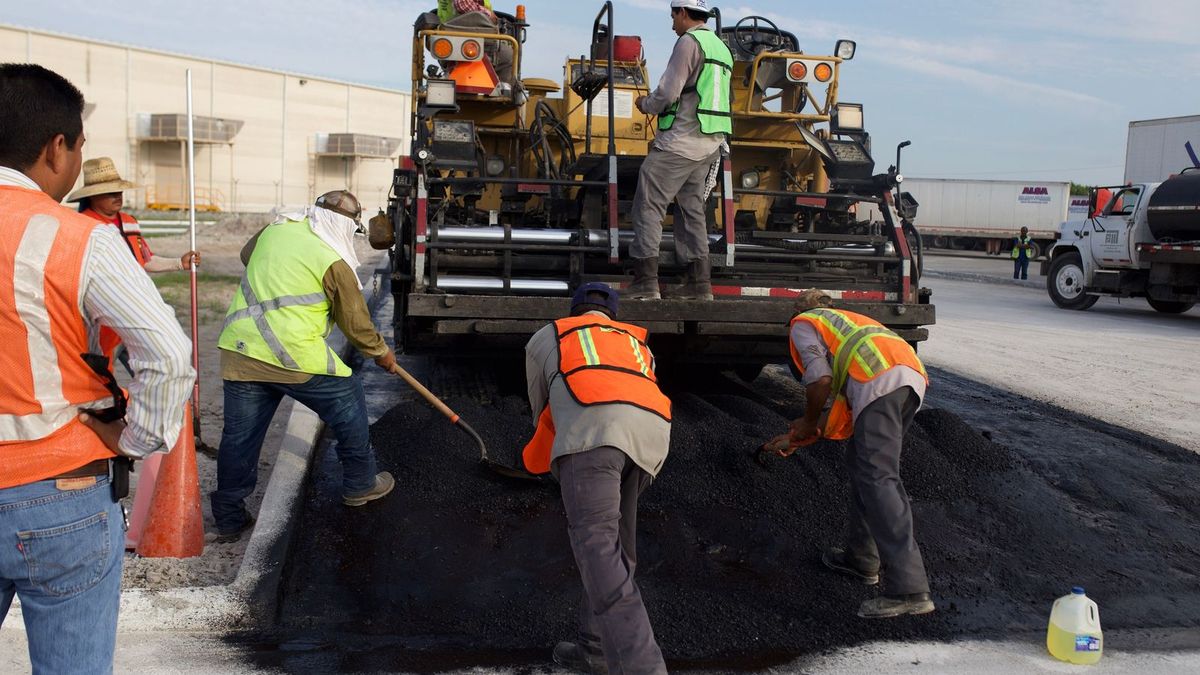
Water is the enemy of asphalt. A hairline crack lets moisture reach the base, the base softens, and what was a five-minute fix becomes a pothole or a sunken section. Timely repair — crack filling, patching, and pothole work — protects the surface you already paid for.
We match the repair to the problem: fill and seal for cracks, cut-and-patch for potholes and failed sections, and a full assessment when damage is widespread enough that resurfacing is the smarter spend. Either way, we tell you straight which one your surface actually needs.
How Asphalt Fails in the Ocala Climate
The failure chain here starts with the sun and ends with the rain. UV oxidizes the surface until it grays and opens up fine cracks. Those cracks are an opening, and Marion County's heavy summer storms drive water straight into them and down to the base. On our sandy subgrade, saturated base loses strength and can wash or shift, the surface loses its support, and a crack becomes a pothole or a soft, sunken spot.
There is no freeze-thaw here to widen cracks the way it does up north — in Ocala it is water and heat doing the damage instead. That actually works in your favor, because it means catching a crack early and keeping water out of the base stops the whole chain before it starts. Crack filling is the highest-return maintenance there is on asphalt here.
Crack Filling and Pothole Patching Done Right
A crack that is just topped off with sealer traps dirt and water and reopens fast. Done right, the crack gets cleaned out and filled with a flexible material deep enough to actually seal it against water — which is the whole point, because water in the base is what every larger failure grows from.
A pothole is a hole because the material and the base under it failed, so a real patch deals with both. We square up and cut out the failed area back to sound edges, clean and rebuild the base where needed, tack it so the new asphalt sticks to the old, then fill and compact in lifts to match the surrounding grade. The alternative — cold-mix shoveled into a ragged hole and tamped with a boot — pops back out within a season because nothing bound and nothing compacted. One is a repair; the other is a way to have the same pothole next year.
Standing Water and Soft Spots
A driveway or lot that holds a puddle after every Florida downpour is telling you something before it cracks. Water sitting on asphalt has all day to soak in, and on our flat, sandy ground a low spot means the base underneath is staying wet and losing strength. Left alone, that birdbath becomes a soft area and then a sunken one.
The fix is not just sealing over the dip — it is correcting the grade and drainage so the water leaves. Catching a low spot while it is still just standing water is far cheaper than catching it after the base has gone soft, so it is worth a look the first season you notice it.
What’s Included
- Crack filling and sealing
- Pothole repair and patching
- Cut-out and replacement of failed sections
- Trip-hazard and edge repairs on lots
- Honest call on repair vs. resurface
Why It Matters in Ocala
Ocala's wet season drives water into every crack it can find, so a driveway or lot that looks fine in spring can develop potholes by fall if the small stuff is ignored. Staying ahead of it with quick repairs is the cheapest way to protect an asphalt surface here.
Asphalt Repair in Ocala — FAQ
Is it worth repairing my driveway or should I replace it?
If the base is sound and the damage is localized, repair is the value play. If cracking is widespread and the base is failing, resurfacing or replacement is smarter. We assess and give you an honest answer.
Do you fix potholes on commercial parking lots?
Yes — pothole and trip-hazard repairs on commercial lots are common work for us, and we can schedule around your business hours.
How quickly can small cracks turn into bigger problems?
In Florida's rain, faster than you'd think. Water reaching the base is what turns a crack into a pothole, so early crack filling pays for itself.
Why does my patch keep popping out?
Almost always because it was cold-mix dropped in an uncut hole and never compacted or keyed into the surrounding asphalt. A cut-out, tacked, and compacted patch behaves like the pavement around it — and if the same spot keeps failing, the base under it may have gone.
My driveway holds water after it rains — is that a problem?
Yes. On our flat, sandy ground standing water keeps the base wet and eventually soft. The fix is correcting the grade and drainage, not just sealing the dip, and it is far cheaper caught early.
When is the best time to fill cracks?
Before the rainy season, ideally. Filled cracks keep water out of the base right when our summer storms are about to go to work, so a crack sealed in spring is one that never becomes a pothole by fall. Sooner is always cheaper than later.
Can you repair a driveway you did not install?
Yes — most of our repair work is on existing surfaces, whoever built them. We assess what is actually failing and fix that, rather than assuming the whole drive needs replacing.
Other Services
- Asphalt Paving in Ocala
- Asphalt Driveways in Ocala
- Sealcoating in Ocala
- Parking Lot Paving in Ocala
- Tar & Chip Driveways in Ocala
- Parking Lot Striping in Ocala
Areas We Serve
- Asphalt Repair in Marion County
- Asphalt Repair in Belleview
- Asphalt Repair in Dunnellon
- Asphalt Repair in Rainbow Springs
- Asphalt Repair in Silver Springs
- Asphalt Repair in Summerfield
Wondering what the job runs? See what an asphalt driveway costs in Ocala.
Free Asphalt Repair Estimate in Ocala
Free, no-obligation estimates across Marion County. Tell us about your driveway or lot.
Call (352) 820-6123