Asphalt Paving in Ocala, FL
New asphalt surfaces for homes, ranches, and businesses across Ocala and Marion County — graded, compacted, and paved to hold up to Florida sun, summer storms, and daily traffic.
Call (352) 820-6123 for a Free Estimate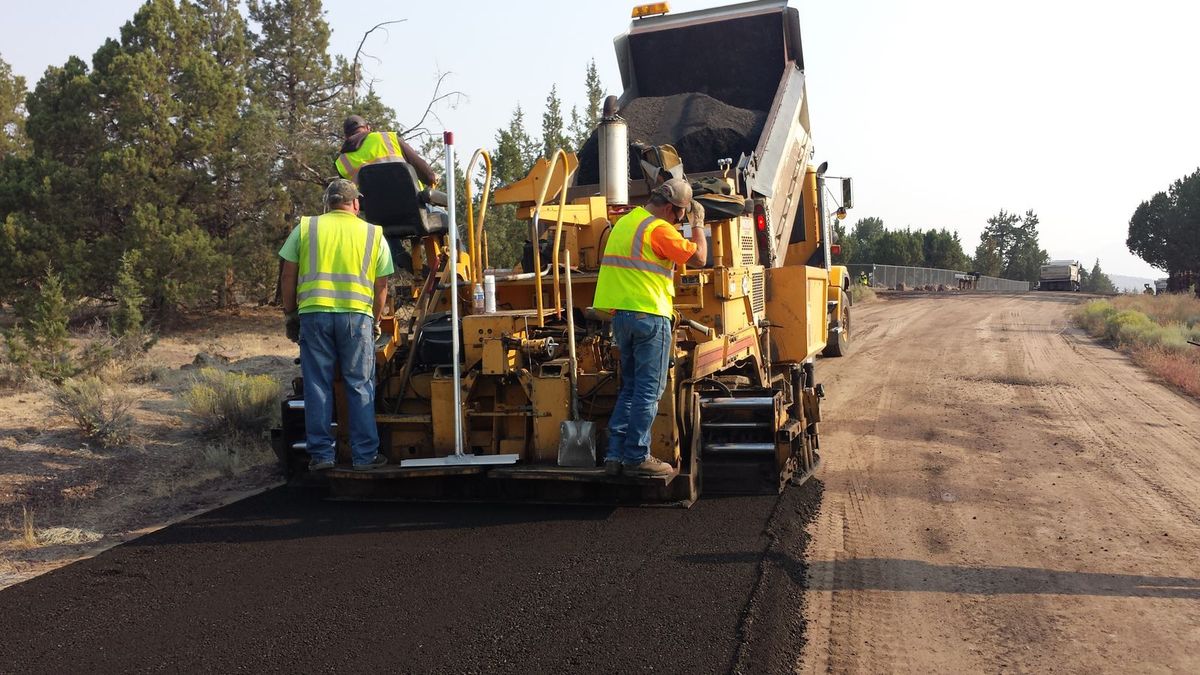
A good asphalt surface is mostly what you cannot see: the grading and the base. We start by shaping the ground so water runs off instead of pooling, then build a compacted stone base that carries the load. Only after that foundation is right do we lay and roll the asphalt. Skip the base work and even fresh pavement cracks and sinks within a season — which is why the prep is where the real value is.
Whether it is a long rural driveway, a private road on acreage, or a fresh lot, the process is the same: assess the site and drainage, grade to fall, build the base, pave, and compact to a smooth, sealed finish. We size the asphalt thickness to how the surface will actually be used, from passenger vehicles to heavier equipment.
The Base Is the Job — Especially in Florida Sand
Most of Marion County sits on sandy soil over limestone, and sand does not behave like the clay you find further north. It drains fast, but it also shifts and washes if it is not confined and compacted, and loose sand under a fresh mat is how you get ruts and low spots in the first year. That is why the base matters so much here. We shape and compact the subgrade, then build a stone or limerock base — the standard load-bearing layer in Florida paving — and compact it in lifts so the asphalt is riding on something stable, not on bare sand.
Base depth is matched to use, not guessed. A passenger-car driveway needs less than a ranch road that sees trucks and trailers, and a surface that will carry equipment needs more still. Anyone quoting the same build for every job is not measuring the one thing that decides how long it lasts.
Built for Sun and Summer Storms, Not Frost
Ocala asphalt does not fail the way northern pavement does — there is no freeze-thaw here. What breaks down a surface in this climate is ultraviolet light and water. Intense Florida sun oxidizes asphalt, drying out the binder that holds it together until the surface goes gray, brittle, and porous. Once it is porous, our heavy summer rains drive water into it and down toward the base. Add the afternoon heat that softens a surface enough to scuff and rut under turning tires, and you have the three things that actually age a driveway here: UV, water, and heat.
We build for that. Proper mat thickness stands up to heat and load, a tight, well-compacted surface keeps water out, and — most important in a flat, rainy county — the grade is set so our downpours sheet off the surface instead of sitting on it. Sealcoating down the road handles the UV. Get those right and an asphalt surface holds up here for many years.
New Install, Overlay, or Full Replacement
Not every tired surface needs tearing out. If the base is still sound and the problems are on top — oxidation, shallow cracking, a worn surface — an overlay lays fresh asphalt over the existing surface for far less than a rebuild, and buys years. If the base has failed, though, an overlay just telegraphs the same failure through the new surface within a season, so a full replacement down to a rebuilt base is the honest answer.
The tell is whether the surface is moving. A drive that has spidered, sunken, or gone soft underfoot has a base problem; one that is simply faded and lightly cracked usually does not. We dig where we need to, tell you which situation you actually have, and quote the option that is the real value — including when that is the cheaper one.
On a new driveway, it is worth seeing how asphalt compares to concrete and pavers before you settle on a surface.
What’s Included
- Site assessment and drainage/grading plan
- Compacted stone or limerock base built for the load
- Hot-mix asphalt laid and rolled to a smooth finish
- Clean edges and proper slope so water sheds
- New installs and full replacements of failed surfaces
Why It Matters in Ocala
Ocala and Marion County have a lot of long, large-lot driveways and ranch access roads — exactly where asphalt earns its keep over the pavers and concrete you see in tighter coastal subdivisions. On those longer runs, a properly based asphalt surface is the cost-effective, low-maintenance choice, and it handles our heat-and-downpour cycle when the drainage is done right.
Asphalt Paving in Ocala — FAQ
How long does new asphalt take to cure before I can drive on it?
You can usually drive on new asphalt within a day or two, but it continues to harden for several weeks. In Ocala's summer heat, be gentle at first — avoid sharp turns while stopped and keep trailer jacks off it. We will give you the specifics for your job and weather.
Do you handle long rural driveways on acreage?
Yes. Long driveways and private roads on larger Marion County lots are a core part of what we do — the grading and drainage matter even more on those longer runs.
Is asphalt or concrete better for an Ocala driveway?
For most longer, rural driveways here, asphalt costs less to install, flexes with the ground, and is simpler to repair. Concrete can make sense for short, decorative drives. We are happy to talk through your specific site.
What is limerock and why does it matter for my driveway?
Limerock is a common Florida base material — a compacted stone layer under the asphalt that carries the load and keeps the surface off the loose sandy subgrade. A properly built and compacted base is the single biggest factor in how long your surface lasts here.
When is the best time of year to pave in Ocala?
Asphalt can be laid year-round in this climate, but we plan around the summer afternoon storms, since fresh asphalt and heavy rain do not mix. We watch the forecast and schedule the pour for a dry window.
Other Services
- Asphalt Driveways in Ocala
- Sealcoating in Ocala
- Asphalt Repair in Ocala
- Parking Lot Paving in Ocala
- Tar & Chip Driveways in Ocala
- Parking Lot Striping in Ocala
Areas We Serve
- Asphalt Paving in Marion County
- Asphalt Paving in Belleview
- Asphalt Paving in Dunnellon
- Asphalt Paving in Rainbow Springs
- Asphalt Paving in Silver Springs
- Asphalt Paving in Summerfield
Wondering what the job runs? See what an asphalt driveway costs in Ocala.
Free Asphalt Paving Estimate in Ocala
Free, no-obligation estimates across Marion County. Tell us about your driveway or lot.
Call (352) 820-6123