Asphalt Driveways in Ocala, FL
A new asphalt driveway that looks sharp, sheds water, and lasts — installed for Ocala homes and Marion County properties of every size, from short residential drives to long ranch entrances.
Call (352) 820-6123 for a Free Estimate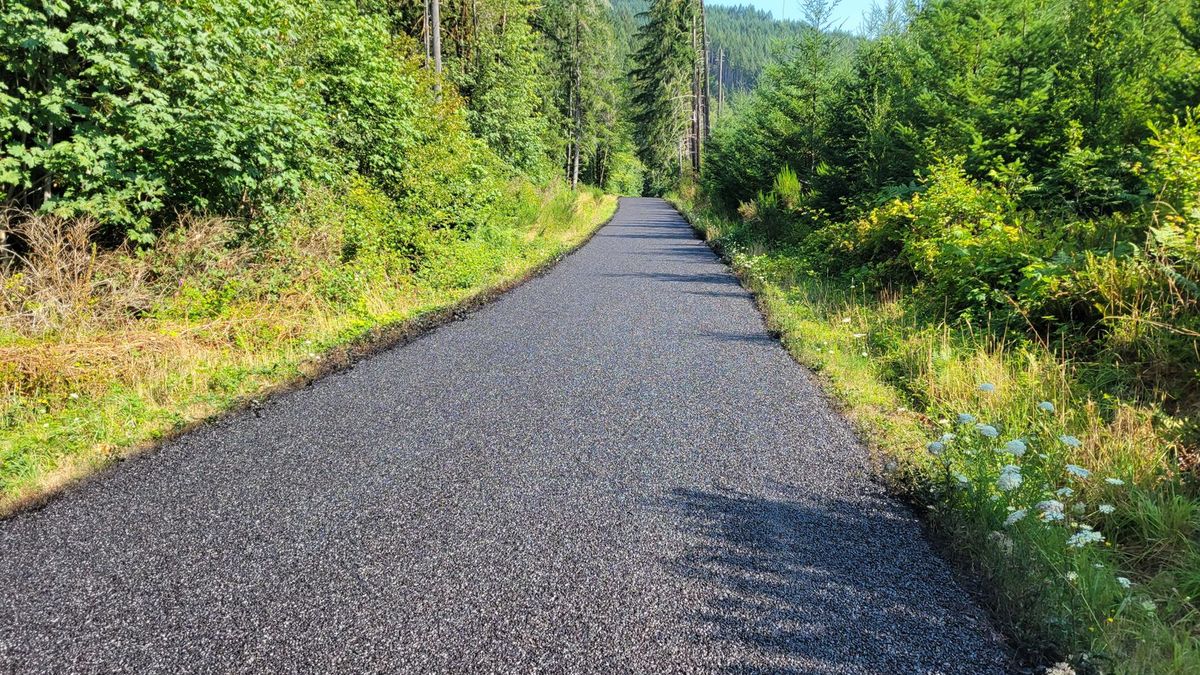
Your driveway is the first thing people see and the surface your family uses every day. We build driveways the right way from the ground up: grade for drainage, compact a solid base, then pave and roll to a clean, even finish that holds up to the Florida climate.
Replacing a cracked, patched, or sunken driveway is often less expensive than homeowners expect, because a fresh surface eliminates the constant small repairs an old one keeps demanding. If your current drive is faded and spidered with cracks, a resurface or replacement resets the clock.
Long Rural and Ranch Driveways
Marion County is horse country, and a lot of properties here sit well back from the road behind long approaches. A three-hundred-foot ranch driveway is not just a bigger version of a suburban one — it is a drainage and base project along its whole length. Water running the length of a drive gathers volume and finds the low spot, so the crown and the fall have to be right the entire way, not just near the house. And the base has to be consistent, because the whole run carries the same trucks, trailers, and daily traffic.
On those longer drives, connecting to the county or state road usually means a proper culvert and entrance so you are not damming the roadside ditch. We build the approach to carry the water and the load, and we size the base and thickness to what actually uses the drive — a horse trailer and a feed truck are a different spec than a sedan.
Drainage on Flat Florida Ground
Much of Marion County is flat, and flat ground plus heavy summer rain is the exact recipe for standing water. A driveway that holds a puddle after every storm is a driveway on a countdown, because that water soaks in through any pore or hairline crack and works on the surface and base from the inside. So drainage is the first thing we plan, not the last.
On a flat lot that means building a crown or a consistent cross-slope so water sheds to the sides, and sometimes a swale alongside to carry it away. Where the sandy subgrade wants to hold moisture, getting the water off and gone is what keeps the base stable. Done right, your drive is dry an hour after the storm passes; done wrong, no thickness of asphalt saves it.
Caring for a New Driveway Here
A new asphalt driveway asks for very little, but the little it asks for matters. For the first few weeks the surface is still curing and is softest in the afternoon heat, so keep trailer jacks and kickstands on a board, avoid turning your wheels hard while parked, and try not to leave a vehicle in the same spot all day in the Florida sun.
After that, the upkeep is simple: fill any cracks that appear so water stays out of the base, and sealcoat every few years to hold off the UV that grays and dries the surface. That small, cheap routine is the difference between a driveway that lasts many years and one that needs resurfacing early.
Asphalt, concrete, or pavers: how to decide
Most people planning a new driveway around Ocala are weighing these three against each other, and none of them wins every time. The right answer usually comes down to how long the driveway is, what the ground under it does with water, and how much upkeep you actually want to take on.
On upfront cost, asphalt is generally the least expensive of the three per square foot, and that gap grows with every additional foot of driveway. On a short apron in a subdivision the difference may be small enough that appearance decides it. On a quarter-mile drive back to a barn, the difference is the entire budget.
On lifespan, concrete typically outlasts asphalt when both are built correctly, and pavers can outlast either because individual units can be lifted and reset. But with all three, what fails first is almost never the surface. It is the base underneath it, and around here that means how the sand was compacted and where the water goes.
What Marion County ground and weather actually do to a driveway
This area gives a driveway a different set of problems than most of the country. The subgrade is sand over limestone, which drains quickly but also shifts and ruts under load if it was never properly compacted. There is no freeze-thaw cycle to speak of. What there is instead is relentless sun and a rainy season that can drop several inches in an afternoon.
Asphalt's weakness here is heat and ultraviolet light. Sun oxidizes the surface, dries out the binder that holds it together, and softens the mat on the hottest afternoons — which is why a parked car can leave a scuff mark and why asphalt needs a periodic sealcoat to stay flexible. Its strength is that it sheds water well and tolerates the minor settling that sandy ground produces.
Concrete does not soften in heat and does not need sealcoating on the same rhythm. It is rigid, though, so when sandy subgrade settles unevenly a slab cracks — which is why concrete is poured with control joints that decide in advance where that crack will go. It also holds heat and glare in a way that is noticeable on a long, bright driveway.
Pavers handle movement better than either, because the surface is made of many small pieces rather than one continuous mat. Settling shows up as an uneven paver rather than a crack, and it can be lifted and reset. The trade-offs are cost per square foot, sand joints that need occasional attention, and weeds and ants finding those joints over time.
Repairs, upkeep, and how each one ages
Asphalt is the most forgiving to repair. Cracks get filled, damaged sections get patched, and a worn surface can often take an overlay if the base below it is still sound. Repairs blend in as the surface weathers. The trade is a maintenance rhythm — sealcoating on a regular cycle and filling cracks as they open, which matters more in this climate than in most because the sun is doing the damage year-round.
Concrete asks less of you routinely but is less forgiving when it does fail. A cracked or settled panel is usually replaced rather than repaired, and a new panel rarely matches the color of the concrete around it. Joints need resealing over the years.
Pavers are the easiest to repair invisibly and the most labor to maintain — resetting units, refreshing joint sand, and keeping growth out of the seams.
There is also a timing difference worth knowing before you schedule anything. New asphalt can typically take vehicle traffic in a day or two, though it stays soft for weeks after that. Concrete generally needs about a week of cure before a vehicle is parked on it. Pavers can be driven on as soon as the installation is finished.
When asphalt is not the right answer
Concrete or pavers tend to make more sense on a short driveway or entry apron where appearance carries real weight, where a decorative finish is wanted, or where the owner would rather pay more at the start and think about it less afterward.
Asphalt tends to make more sense on the long rural and horse-property drives this area is full of, where cost per square foot decides what is possible at all, and for owners who would rather spend less up front and keep a simple maintenance rhythm.
If your driveway is short, visible from the road, and the budget is not the constraint, concrete or pavers are a defensible choice — and any paving contractor who tells you asphalt is always the answer is selling, not advising.
When you are ready to talk numbers, here is what an asphalt driveway costs in Ocala and what moves the price.
What’s Included
- New driveway installation, start to finish
- Tear-out and replacement of failed driveways
- Proper grading so water drains off the surface
- Smooth, sealed finish with clean edges
- Sizing and thickness matched to residential use
Why It Matters in Ocala
Around Ocala — especially out toward horse country and the larger lots in Marion County — driveways run long. That length is exactly why asphalt is the practical pick: it covers more ground for the money and is easy to maintain over the years, provided the base and slope are done correctly.
Asphalt Driveways in Ocala — FAQ
How much does a new asphalt driveway cost in Ocala?
It depends on length, width, and site prep — a short residential drive and a long ranch entrance are very different jobs. Call for a free, no-obligation estimate specific to your property.
Can you resurface my old driveway instead of replacing it?
If the base is still sound, resurfacing (an overlay) can be a cost-effective option. If the base has failed, replacement is the better long-term value. We will assess and tell you honestly.
How long will an asphalt driveway last?
A well-built, well-drained asphalt driveway can last many years, and sealcoating every few years extends its life. Longevity comes down to the base, drainage, and upkeep.
Can you pave over my existing gravel or dirt driveway?
Often, yes — a well-established gravel drive can be graded, topped with additional base, and paved. A soft or rutted one needs that fixed first. We will check what is under there and tell you what it actually needs.
Do I need a permit for a new driveway in Marion County?
A new connection to a county or state road generally needs an access permit and often a culvert at the entrance. Requirements vary by road, so confirm the current rules for your address; we build the entrance to meet them.
How wide should my driveway be?
A single-car drive is usually about ten feet, and a comfortable two-car or trailer-friendly drive is wider. On rural properties we also plan turnarounds and pull-offs so you are not backing a trailer down a long approach. We will lay out a width that fits how you actually use it.
How long does it take to install a driveway?
Most residential driveways are a one- to two-day job once we start, depending on how much base has to be built and the length of the run. Longer ranch approaches take more. We give you a realistic timeline with the estimate.
Is asphalt cheaper than concrete for a driveway?
Generally yes, per square foot, at installation, and the longer the driveway the wider that gap gets. Over a full lifespan the difference narrows, because asphalt asks for periodic sealcoating while concrete asks for less routine upkeep.
Which lasts longer in Florida sun, asphalt or concrete?
Concrete usually lasts longer if both are built correctly, and it does not soften in heat. Asphalt's binder is what the sun attacks, which is why sealcoating matters more here than in cooler climates. With either one, the base underneath decides the outcome more than the surface does.
What about pavers?
Pavers handle settling well because individual units can be lifted and reset, and they look the best of the three to most people. They also cost the most per square foot and need joint sand refreshed and weeds kept out of the seams.
How soon can I drive on each one?
New asphalt typically takes vehicle traffic in a day or two, though it stays soft for several weeks and can scuff under a turning wheel. Concrete generally needs about a week of cure. Pavers can be driven on right away.
Other Services
- Asphalt Paving in Ocala
- Sealcoating in Ocala
- Asphalt Repair in Ocala
- Parking Lot Paving in Ocala
- Tar & Chip Driveways in Ocala
- Parking Lot Striping in Ocala
Areas We Serve
- Asphalt Driveways in Marion County
- Asphalt Driveways in Belleview
- Asphalt Driveways in Dunnellon
- Asphalt Driveways in Rainbow Springs
- Asphalt Driveways in Silver Springs
- Asphalt Driveways in Summerfield
Wondering what the job runs? See what an asphalt driveway costs in Ocala.
Free Asphalt Driveways Estimate in Ocala
Free, no-obligation estimates across Marion County. Tell us about your driveway or lot.
Call (352) 820-6123